Compact Plush Cat Tree: Condo, Hammock & Scratch Posts
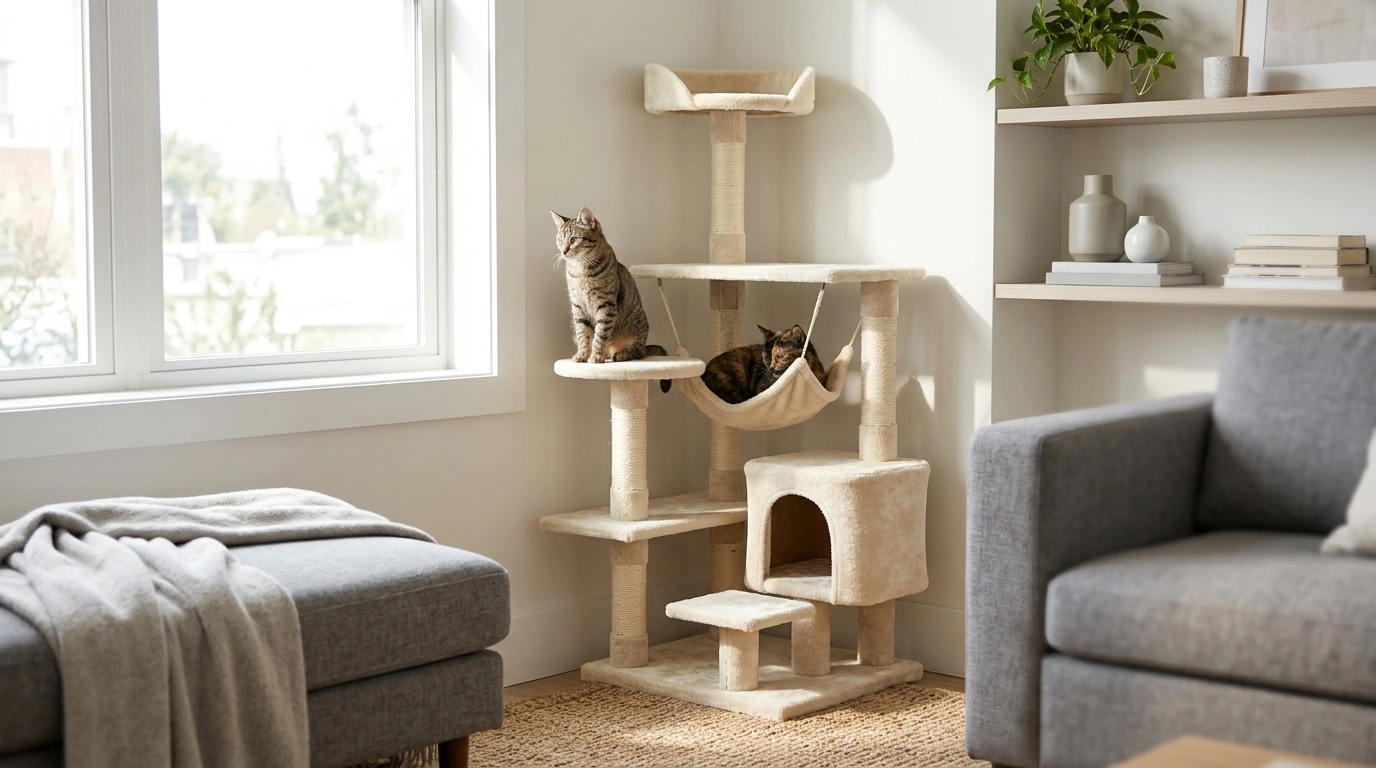
A compact multi-level cat tree can turn a corner of a room into a complete indoor territory: climbing routes, a covered hideaway, a hammock for lounging, and scratching posts that help protect furniture. This guide breaks down what to look for, what features matter most for small indoor cats, and how to set up and maintain a plush cat tree for everyday use.
Why a multi-level cat tree works well indoors
Indoor cats thrive when their environment offers variety and control over their space. A multi-level cat tree uses vertical height to create “zones” without taking over the room, which is especially helpful in apartments and smaller homes.
- Vertical space supports natural behaviors like climbing, perching, and monitoring the room from a safe height.
- Multiple levels reduce boredom by offering choices: rest, play, scratch, or hide.
- A condo-style cubby gives an enclosed retreat for cats that prefer privacy or need downtime.
- Adding a hammock introduces a different lounging posture that many cats prefer for longer naps.
- Scratching posts provide an appropriate outlet for claw maintenance and scent marking.
If you’re trying to discourage unwanted scratching, offering a scratch-friendly alternative is a practical step. The AVMA’s guidance on declawing also reinforces why enriching alternatives—like sturdy scratching surfaces—matter for everyday cat care.
What this plush cat tree includes
A good compact tree for small indoor cats is less about extreme height and more about smart, usable features. The goal is a layout that invites frequent use: quick hops, predictable landings, and cozy resting options that feel secure.
- Multi-level platforms designed for easy hopping and short climbs for smaller cats.
- A covered condo for resting and decompressing away from foot traffic.
- A hammock-style lounge for soft, cradled naps.
- Multiple scratching posts to encourage use from different angles and levels.
- Plush covering for comfort, warmth, and gentle traction for paws.
At-a-glance feature guide
| Feature | What it’s for | Best for |
|---|---|---|
| Condo (enclosed cubby) | Security and quiet rest | Shy cats, multi-pet homes, nap time |
| Hammock | Cradled lounging and relaxation | Cats that love soft, suspended beds |
| Multi-level platforms | Climbing, perching, play routes | Active indoor cats, window watching |
| Scratching posts | Claw care and marking | Redirecting scratching away from furniture |
| Plush finish | Comfort and traction | Cozy sleepers, cooler rooms |
To see a space-friendly option that combines these features, visit the Multi-Level Plush Cat Tree for Small Indoor Cats with Condo, Hammock & Scratching Posts.
Size, stability, and placement that make a difference
Even the softest cat tree won’t get much use if it feels wobbly or awkward. For smaller cats, the sweet spot is a structure that feels sturdy under a quick leap and offers comfortable perches without forcing long jumps.
- Match the scale to the cat: smaller cats do well with shorter jumps and moderately sized perches.
- Stability matters most on the top tier; a wide, firm base reduces wobble during leaps.
- Place near a wall or in a corner to create a secure feel and reduce side-to-side movement.
- A window-adjacent spot can increase use by combining perching with outdoor viewing.
- Keep it away from fragile décor or shelving where a sudden zoomie could cause collisions.
Placement can also support calmer routines. Setting the tree close to a favorite nap area (but not in the busiest walkway) helps it become a default hangout rather than an occasional novelty.
Comfort and cat-friendly materials
Plush cat trees are popular because they feel warm and inviting, but comfort is about more than softness. The best surfaces offer a bit of traction and hold up to daily use.
- Plush surfaces should feel soft but not overly slick; mild texture can help cats grip when climbing.
- Scratching posts work best when the scratch material is firm enough to resist collapsing under pressure.
- Look for well-finished seams and edges to reduce snagging and early fraying.
- If a cat sheds heavily, a lint roller or vacuum attachment helps keep plush surfaces inviting.
- For sensitive cats, allow a short “air-out” period after unboxing before introducing the tree.
For broader indoor-care basics—nutrition, enrichment, and home setup—the ASPCA Cat Care resources are a helpful reference point.
Helping a cat use the condo, hammock, and scratching posts
Some cats claim a new cat tree immediately; others need a few low-pressure days. The trick is to make each feature feel familiar and rewarding without turning it into a “test.”
Care, cleaning, and safety checks
A compact option for small indoor cats
If you’re styling a cat-friendly corner and want a home accent nearby (away from scratch zones), the Nordic Girl Diver Reading Figurine is another in-stock option that fits cozy living spaces.
FAQ
How do you get a cat to use a new cat tree?
Place it near a favorite resting spot or a window, then use treats or a wand toy to guide gentle exploration up the levels. Add familiar scent in the condo (like a worn t-shirt), and give your cat a few days to adjust without pressure.
Is a cat condo better than an open bed?
A condo offers privacy and a “hidden” feeling that can help shy or easily overstimulated cats relax. Open perches and hammocks work better for cats that prefer visibility, so having both options covers different moods.
How often should scratching posts be replaced?
Replace or refresh them when the surface becomes too smooth to grip, sheds excessively, or your cat stops choosing it. Rotating the tree’s position and rubbing a little catnip on the scratch area can extend its usefulness.








Leave a comment