Baby Musical Piano Toy: Lights, Sounds & Learning
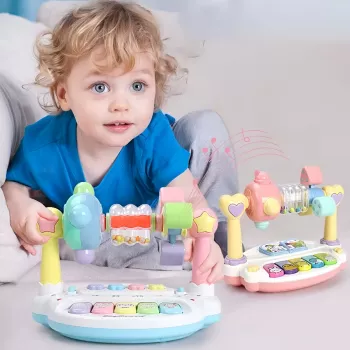
Baby Musical Piano Toy with Lights & Sounds: An Educational Keyboard Toddlers Can Explore Daily
Toddlers learn best through playful repetition—press, hear, watch, repeat. A baby musical piano toy with lights and sounds turns those simple moments into early music discovery, cause-and-effect learning, and fine-motor practice. Our team put together this guide to help you understand what an educational keyboard can support at home, how to use it in short, happy play sessions, and what to look for when choosing a musical toy for little hands.
What Makes a Baby Musical Piano Toy So Engaging
Musical toys hold attention because they reward curiosity right away. A single key press creates an immediate result, and toddlers naturally want to try it again—then try it differently.
- Cause-and-effect learning: pressing a key triggers sound and light, reinforcing action → result.
- Sensory play in one spot: music (auditory) + glowing buttons (visual) + tapping (tactile).
- Early rhythm and listening skills: repeating tones encourages timing, turn-taking, and attention.
- Independent play bursts: toddlers can explore freely without complex setup.
- A gentle introduction to “instrument rules”: different keys create different outcomes, setting the stage for structured music play later.
Skills This Educational Keyboard Supports (Without Turning Play into a Lesson)
You don’t need formal “teaching time” for a toy to be educational. When you keep play light and responsive, toddlers practice foundational skills in a way that feels like fun.
- Fine-motor practice: tapping keys supports finger isolation, hand strength, and coordination.
- Bilateral coordination: one hand stabilizes while the other taps, then hands switch naturally.
- Auditory discrimination: noticing higher/lower sounds and repeated patterns.
- Early language building: naming actions (“press,” “listen,” “again”), sounds, and simple sequences.
- Emotional regulation: predictable music-and-light feedback can feel calming in short sessions.
For a broader view of play-based development, the CDC’s milestone guidance is a helpful reference, and the American Academy of Pediatrics offers practical toy-selection principles that align well with everyday, screen-free play.
Simple Ways to Use It at Home (Fast Routines That Fit Real Life)
Short, predictable routines help you use a musical keyboard often—without it becoming a big project. If your toddler wants to keep going, you can always repeat the same quick game later.
- Two-minute welcome song: press a few keys together at the start of playtime to signal a routine.
- Copycat game: tap 1–2 keys; pause; invite your toddler to repeat the pattern.
- Color/position talk (if visible on the toy): “top key,” “left key,” “bright light,” “loud/soft.”
- Big-movement breaks: alternate tapping keys with clapping or gentle bouncing to connect sound and body rhythm.
- Quiet-time reset: slow tapping, fewer key changes, and short sessions can help with transitions.
Quick Comparison: Musical Toy Play Ideas by Age Stage
Keep expectations flexible—toddlers may explore with hands, palms, or gentle tapping rather than “playing songs.” Short sessions beat long ones; stopping while it’s still fun helps prevent overstimulation.
| Stage | How toddlers typically play | Easy activity to try | What it builds |
|---|---|---|---|
| Early toddler | Presses random keys repeatedly; watches lights | Name the action: “press—music!” then pause for them to press again | Cause-and-effect, attention |
| Growing toddler | Starts switching keys; repeats favorites | Copy 2 taps; invite them to copy you back | Memory, turn-taking |
| Confident toddler | Experiments with louder/softer tapping and patterns | “Fast/slow” game: tap quickly, then slowly | Rhythm, impulse control |
Choosing a Musical Piano Toy That Works in a Toddler Home
A Good Fit for Gifts, Play Corners, and Screen-Free Moments
Product Spotlight: Baby Musical Piano Toy with Lights & Sounds
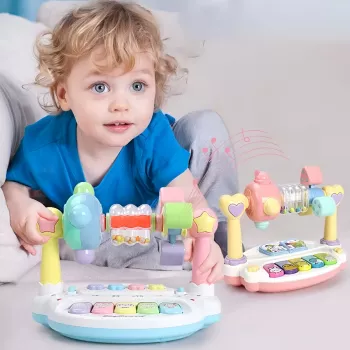
If you want a simple, repeatable musical activity your toddler can return to daily, our Baby Musical Piano Toy with Lights & Sounds – Educational Keyboard for Toddlers is designed for that press-and-discover style of play. The immediate press → hear → see loop encourages your child to experiment, repeat, and gradually vary what they do (different keys, different rhythms, faster/slower tapping).
To round out a cozy, low-effort routine, you can also pair a small “music corner” with a simple rest-and-read setup like our Montessori Floor Bed with Fence, or keep a quiet tabletop activity nearby (for after the music break) like our 3D Puzzle Scout Beetle. These kinds of pairings make it easier for you to move from active sound play to calmer play without a hard stop.
FAQ
What age is a baby musical piano toy best for?
It’s typically a strong match for toddlers who are in the “press-and-see-what-happens” stage through the stage where they start copying simple patterns. Your best guide is your child’s play style—random tapping is just as appropriate as early rhythm play—and close supervision helps keep play safe and positive.
How can a toddler use a musical keyboard without getting overstimulated?
Keep sessions short and predictable, and try a simple routine (hello song, copycat game, then done) so your toddler knows what to expect. If you notice cues like agitation or covering ears, pause the toy and switch to a calm activity, then come back later.
Does an educational keyboard actually help development, or is it just noise?
When it’s used as guided play, a keyboard can support cause-and-effect learning, fine-motor practice, and listening skills. If you join for quick turn-taking or imitation games, it also becomes a simple way to practice attention and back-and-forth interaction.






Leave a comment