Rustic Wooden Play Kitchen for Kids 3+ (Lights & Apron)
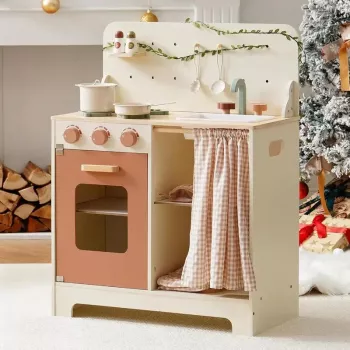
Rustic Wooden Play Kitchen Set with Light String, Apron, and Gloves for Kids 3+
A wooden play kitchen with rustic styling can turn everyday pretend meals into hours of imaginative play. This set adds cozy details—like a light string and wearable accessories—while encouraging role-play, language growth, and everyday-life skills in a kid-friendly setup for ages 3 and up. The wood-look design also blends nicely into shared family spaces, so it can live in a living room corner without feeling loud or out of place. For more guidance, see Touch us Wooden Play Kitchen Toy Set with Light.
What Makes This Play Kitchen Feel Special
- Rustic wood look: A warm, homey style that fits many playrooms and shared spaces without looking overly “toy-like.”
- Light string detail: Adds an inviting glow that naturally inspires “café,” “bakery,” and “hosting” storylines.
- Apron and gloves included: Wearable pieces help kids step into roles like chef, baker, or helpful sous-chef.
- Open-ended play: Supports cooking, serving, cleaning, and organizing—no single “right way” to play.
- Gift-ready for ages 3+: A memorable birthday or holiday option for kids who love role-play and hands-on fun.
If you want a kitchen with charming extras built in, the Rustic Kids Wooden Play Kitchen Set with Light String, Apron, and Gloves – Pretend Play Kitchen for 3+ makes it easy to set the stage for everyday pretend routines.
What’s Included and How Kids Use It
- Wearables (apron and gloves): “Dressing the part” helps many kids feel confident starting play—especially in new or shared-play situations.
- Lighting element (light string): It can become an “oven light,” “café ambience,” or even “camp kitchen” mood lighting during imaginative scenarios.
- Pretend kitchen setup: Encourages familiar routines—prep, cook, serve, and tidy—that mirror real household sequences.
- Solo or group play: Great for independent play, but even better when siblings or friends take on roles like customer and server.
- Built-in story prompts: Kids can create menus, run a cooking show, host guests (stuffed animals, dolls), or plan a grocery trip.
For families building a calm, kid-centered routine at home, pairing active pretend-play zones with cozy rest spaces can be helpful. If you’re also setting up a child-friendly bedroom, the Montessori Floor Bed with Fence is a complementary option for independence-focused rooms.
Developmental Benefits for Ages 3+
Pretend play supports learning in ways that feel natural and child-led. Organizations like the American Academy of Pediatrics and NAEYC highlight play as a key part of healthy development—especially when kids can explore social roles, language, and problem-solving.
- Language development: Naming foods, describing steps (“first we chop, then we stir”), taking “orders,” and negotiating roles.
- Social-emotional growth: Turn-taking, sharing tools, and practicing kindness through “serving” others.
- Early math and sequencing: Counting items, sorting pretend ingredients, and following multi-step routines like bake → cool → serve.
- Fine-motor practice: Grasping, twisting, placing, arranging, and careful “serving” actions build control and coordination.
- Independence and life skills: Practicing safe, pretend versions of cooking and cleaning routines helps kids feel capable.
How to Set It Up for Maximum Play Value
- Create a simple “kitchen zone”: Add a small basket for play food, and a hook or peg for the apron and gloves so kids can manage their own setup.
- Rotate props weekly: Switch themes—breakfast café, pizza night, farmer’s market—to refresh interest without buying much more.
- Add easy printables: A pretend menu, grocery list, or “open/closed” sign can spark longer play sessions.
- Use lighting thoughtfully: Keep the light string visible to inspire evening café, holiday bakery, or “late-night diner” stories.
- Invite cooperative play: Assign roles (chef, server, customer) to reduce conflicts and help kids stay engaged together.
If your child enjoys building and displaying creations alongside pretend play, a hands-on project like the 3D Puzzle Scout Beetle can add variety to screen-free time while still supporting focus and fine-motor skills.
Safety, Materials, and Care Notes
Quick Reference: Features at a Glance
| Feature | Why It Matters for Play | Best For |
|---|---|---|
| Rustic wooden style | Blends into shared spaces; feels like a “real” kitchen | Playrooms, living rooms, shared family areas |
| Light string detail | Creates ambience and story prompts (café, bakery, camp kitchen) | Kids who love imaginative scenes and “hosting” |
| Apron included | Supports role identity and pretend routines | Chef/baker role-play |
| Gloves included | Adds realism for “hot” items and baking play | Oven, bakery, cooking-show scenarios |
| Pretend play kitchen setup | Encourages sequencing and cooperative play | Ages 3+; siblings and playdates |
Who This Kitchen Set Is Best For
FAQ
Is a wooden play kitchen a good choice for a 3-year-old?
Yes—many 3-year-olds thrive with pretend routines like cooking, serving, and cleaning, which support language and everyday-life skills. Stick to age-appropriate sets and supervise accessories and shared play to keep playtime safe and positive.
How can the light string be used during pretend play?
It can become an “oven light,” a cozy café glow, a holiday bakery sparkle, or even nighttime “camp kitchen” lighting for imaginative scenes. An adult should handle setup, and it’s smart to periodically check that the lighting element remains secure and in good condition.
What are easy add-ons to extend play without buying a lot more toys?
A small basket of play food, a few clean recycled food boxes, simple printable menus, a notepad for taking “orders,” and a small towel for “clean-up” can expand play in a big way. These low-cost props encourage longer storylines and more varied roles.









Leave a comment