Vacuum Compression Travel Backpack for 17″ Laptops
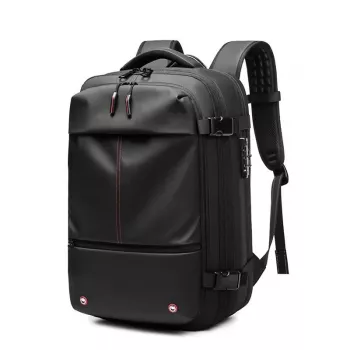
Travel Laptop Backpack with Vacuum Compression – Expandable 17” Business Bag
A vacuum-compression expandable backpack can shrink bulky clothes into a slimmer profile while still protecting a large laptop and keeping work essentials organized. That combination is especially useful when a single carry has to cover commuting, airport lines, and a quick change of clothes for a meeting. Below is a practical breakdown of what vacuum compression changes, how to pack for 1–3 days without fighting the zipper, and how an expandable 17” business bag can fit real travel routines.
What Vacuum Compression Changes in a Travel Backpack
Traditional travel backpacks rely on simple expansion: add depth, add volume, and accept the “stuffed” look. Vacuum compression flips the strategy by reducing the volume of soft goods so your tech space stays consistent.
- More room for essentials that can’t be squished: Compressing clothes and light layers keeps space available for a laptop, documents, and hard cases.
- A steadier, rectangular shape: A pack that stays more “boxy” is easier to slide under a seat or into an overhead bin without snagging.
- Less pressure on electronics: Separating “squishable” clothing from fragile gear lowers the chance that dense packing will press on screens and corners.
- Simpler short trips: With an efficient clothing load, one bag can cover 1–3 days without a second tote.
- Best practice matters: Fold or roll clothing evenly and keep hard objects out of the compression zone so the seal and pressure stay consistent.
Quick Specs and Feature Snapshot
This style of bag is built for people who carry a larger laptop and still want travel capacity on demand. The key features to look for are a secure laptop fit (up to 17”), an expandable main body for overflow items, and a dedicated vacuum-compression compartment for clothing volume reduction.
- Designed for larger laptop carry (up to 17”).
- Expandable capacity for switching between daily carry and travel mode.
- Vacuum-compression compartment to reduce clothing bulk.
- Business-oriented organization for chargers, cables, and small accessories.
- Practical for flights, trains, client meetings, and campus days.
Packing Use-Cases: What Goes Where
| Area of the bag | Best for | Packing tips |
|---|---|---|
| Laptop sleeve | 17” laptop, tablet, documents | Keep the heaviest tech closest to the back panel for better balance. |
| Compression compartment | T-shirts, underwear, light layers | Fold flat; avoid placing chargers or toiletries where compression pressure can deform them. |
| Main/expandable space | Headphones case, toiletry kit, light shoes | Use a small pouch to prevent items migrating into corners. |
| Organizer pockets | Power bank, cables, pens, passport | Group by “in-transit” vs “at-destination” so security checks are faster. |
How to Pack for 1–3 Days Without Overstuffing
Vacuum compression is most effective when you pack like a minimalist—then let the compression finish the job. A simple capsule set prevents the common mistake of packing “maybe” outfits that never get worn.
- Start small: 2–3 tops, 1–2 bottoms, socks/underwear, and one mid-layer handles most 1–3 day schedules.
- Compress only compressible items: T-shirts, base layers, and light knits do great; rigid items don’t.
- Use expansion for “no-crush” gear: Toiletries, hard cases, and fragile accessories belong outside the compression zone.
- Keep quick-access items reachable: ID, boarding pass, sanitizer, and earbuds should live in a front or side pocket so you don’t repeatedly open the main compartments.
- Re-check the carry feel after compressing: Keep dense tech near your back and lighter items toward the front to reduce shoulder strain.
Laptop Protection and Workday Organization
A 17” laptop is a serious load, so the sleeve fit matters. A snug compartment helps reduce sliding and corner impact during train transfers, rideshares, and crowded terminals.
Carry Comfort for Heavier Loads
Carry-On Fit and Airport Practicalities
- Confirm airline limits before you fly: Check your carrier’s personal-item dimensions, especially if you plan to expand the bag.
- Use compression to stay sleek: A slimmer profile is more likely to slide under the seat without a fight.
- Make security faster: Keep liquids and electronics accessible so you don’t open the compression area in line.
- Keep fragile items out of the compression zone: Pressure can crack hard cases or stress delicate contents.
- Handle battery items correctly: Follow current screening and carry-on guidance for electronics and batteries from TSA: What Can I Bring? and review lithium battery safety basics from IATA’s lithium battery overview.
Who This Expandable Compression Backpack Suits Best
Product Option Available Now
If you want the compression-plus-expansion approach in one carry, the Travel Laptop Backpack with Vacuum Compression – Expandable 17” Business Bag is available now and built for mixed business-and-travel use. Kept within an airline’s size limits, it can work as a primary personal item; expanded mode is ideal for “gate-to-hotel” capacity when you want extra room after arrival.
For travelers who also want a portable power option for devices at the destination (or in remote work settings), pair your setup with the 100W Foldable Solar Panel for Portable Power Stations for flexible charging when outlets are limited.
FAQ
Does vacuum compression damage clothes or create deep wrinkles?
Most everyday fabrics handle short-term compression well, but wrinkles depend on fabric type and how evenly items are folded. Fold clothes flat, avoid over-tight compression for dress shirts, and unpack soon after arrival to let garments relax.
Is a 17” laptop backpack allowed as a personal item on flights?
It depends on the airline and route, since personal-item dimensions vary. To improve your odds, travel with the bag unexpanded and use compression to reduce bulk before boarding.
What should not go in the compression compartment?
Avoid hard or fragile items like chargers, power banks, toiletry bottles, sunglasses cases, and anything that could deform or leak under pressure. Keep those items in the main/expandable space or organizer pockets instead.







Leave a comment