Wooden Kids Workbench Playset: Tools for Pretend Builders
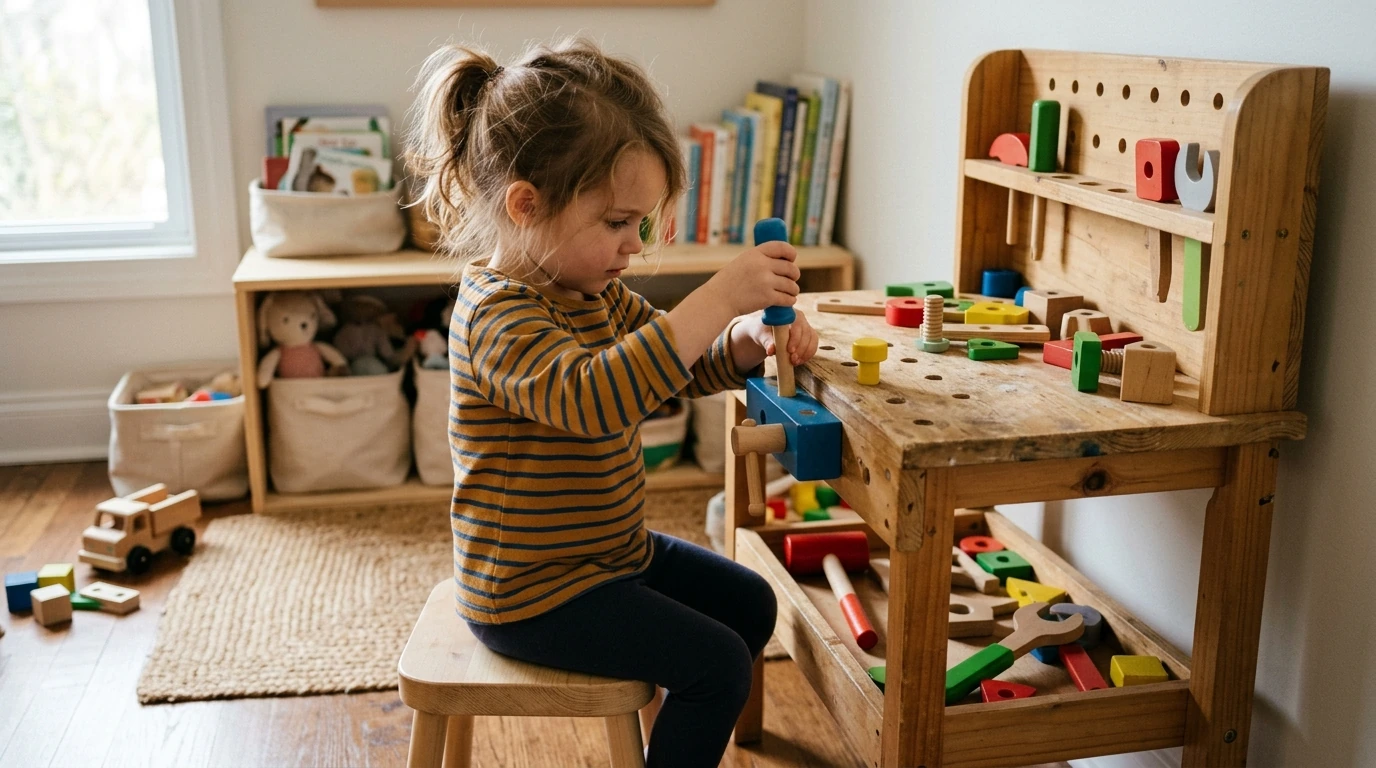
Wooden Kids Workbench Playset with Tools: A Little Workshop for Big Imagination
A play workbench turns those “Can I help?” moments into hands-on play that feels purposeful. Our Wooden Kids Workbench Playset with Tools is made for kids who love to build, fix, and copy the everyday projects they see at home—while practicing real-world skills like sorting, matching, planning, and problem-solving through pretend play. When you give your child a dedicated “shop,” you’re also giving them a place to slow down, focus, and finish a project from start to tidy-up.
Why a play workbench belongs in the playroom
A workbench isn’t just another pretend-play station—it’s a mini routine builder. Because the play has a clear purpose, many kids naturally stick with it longer than they would with toys that don’t have an obvious “next step.”
- Turns role play into skill-building: measuring, lining up, fitting pieces together, and trying again when something doesn’t work.
- Encourages longer, more focused play: the “job” has a beginning, middle, and end (set up → build/repair → put away).
- Supports social play: kids can take turns being the builder, helper, or the “customer” bringing something to fix.
- Keeps excitement high without screens: tools, parts, and a workspace invite exploration on their own.
What to look for in a wooden kids workbench playset with tools
If you’re choosing a workbench for everyday use, a few practical details make a big difference in how often it gets played with—and how smoothly that play goes.
- Stable base: a workbench should feel steady during pushing, turning, and tapping motions.
- Kid-friendly tool shapes: tools that are easy to grip help children coordinate both hands together.
- Parts that invite building: pieces that can be combined in different ways keep the set interesting beyond the first week.
- Simple organization: storage spots or trays make clean-up intuitive and help kids learn responsibility.
- Materials that suit everyday play: wood playsets are often chosen for their classic feel and durability in high-use areas.
| What matters | Why it matters for play | What to check at home |
|---|---|---|
| Stability | Helps kids focus on building instead of balancing the bench | Place it on a flat surface; avoid wobbly rugs if needed |
| Grip-friendly tools | Supports fine-motor practice and confidence | Do tools fit small hands without slipping? |
| Repeatable building options | Extends play value over time | Can parts be used in more than one “project”? |
| Easy storage | Makes clean-up part of the routine | Is there a bin/shelf nearby for extra pieces? |
| Age-appropriate pieces | Reduces frustration and supports safe play | Choose based on your child’s stage and supervision level |
Play ideas that make the most of a workbench set
A workbench really shines when you treat it like a flexible “shop” instead of a one-time build. If you set out simple challenges, you’ll often see deeper concentration and more creative problem-solving.
- “Fix-it station”: bring in toy cars, doll furniture, or a cardboard “appliance” and let your child diagnose and repair.
- Build-and-name challenge: make a new gadget, name it, and explain what it does (a fun boost for storytelling and vocabulary).
- Pattern builder: line up pieces by color or shape before assembling—an easy way to add early math thinking.
- Helper jobs: ask for a “tool handoff” in pretend home projects (hammer, then wrench), building listening skills and sequencing.
- Timed tidy-up: set a short timer and turn clean-up into a matching game.
Setting up a safer, calmer workshop corner
How you set up the area often determines whether the workbench feels inviting—or chaotic. A small, consistent “work zone” helps kids know what to do and where things go afterward.
For general toy safety guidance, you can also reference the U.S. Consumer Product Safety Commission’s toy safety page (CPSC Toy Safety) and the American Academy of Pediatrics overview (HealthyChildren.org: Toy Safety).
When this gift is a perfect fit
Pair it with another hands-on favorite
- For a quiet project: our 3D Puzzle Scout Beetle adds a patience-and-planning challenge on days your child wants to concentrate.
- For a child-accessible routine: a room designed around independence can make play (and rest) feel more self-directed; our Montessori Floor Bed with Fence fits that child-first approach.
- For ongoing variety: rotate “shop days” with puzzle days and storytelling days so the workbench stays fresh without needing constant new toys.
FAQ
What age is a wooden kids workbench playset with tools best for?
Many families find a wooden workbench works well across the preschool-to-early-elementary range, depending on your child’s fine-motor skills, interest in pretend play, and how closely you’ll be supervising. If your child enjoys copying real tasks and sticking with a project, a workbench is often a great match.
Is a wooden tool workbench safe for indoor play?
Indoor play can be safe when you place the bench on a stable surface, keep pieces organized, and supervise younger children—especially around smaller components. Following general toy safety recommendations and keeping the play area uncluttered helps reduce accidents.
How can the workbench stay interesting after the first few days?
Rotate “projects” (repair shop one day, invention lab the next), add simple cardboard items to fix, and create themed challenges like building something that “moves” or matches a color pattern. Inviting siblings or caregivers into roles (builder/helper/customer) also keeps the play open-ended and new.








Leave a comment