Build a Hand-Crank Wooden Film Projector (183 pcs)
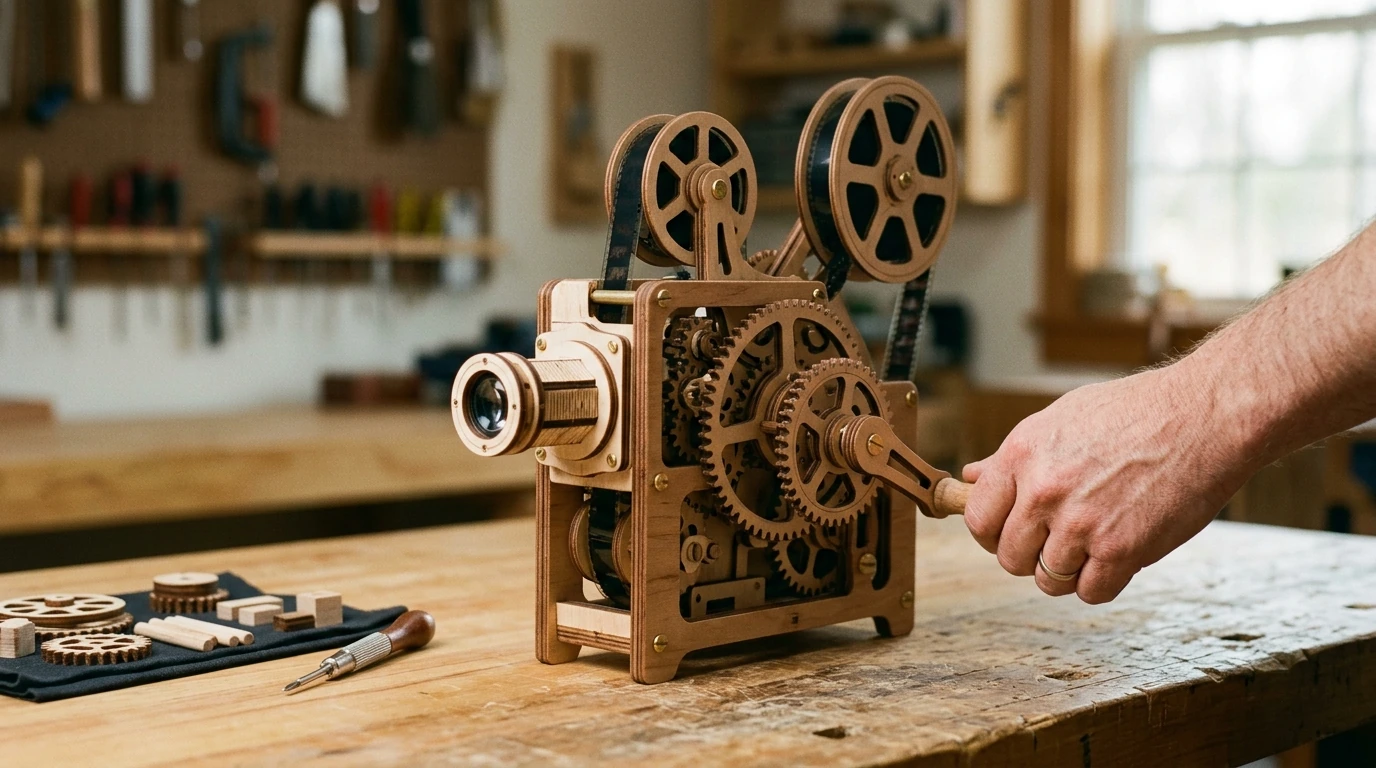
183-Piece DIY 3D Wooden Hand-Crank Film Projector Kit: Build It, Turn the Crank, Watch the Magic
Some builds are meant to sit on a shelf. This one earns its spot by doing something. The 183-Piece DIY 3D Wooden Hand-Crank Film Projector Kit is a hands-on wooden model that rewards careful assembly with a working, crank-driven viewing experience—part classic cinema nostalgia, part mechanical puzzle, part keepsake you’ll want to show off.
Why a hand-crank projector build feels different
A working projector-style build stands out because the “finish line” isn’t just a completed shape—it’s a mechanism you can operate. When you turn a crank, you’re not watching a motor do the work; you’re feeling gear engagement, alignment, and smooth movement in real time.
- A project with a purpose: the finished model is designed to be used, not just displayed.
- Hand-powered motion makes every turn feel intentional—gears, alignment, and smooth cranking are part of the satisfaction.
- A screen-free kind of “movie night” energy: the fun comes from building, understanding the mechanism, and operating it by hand.
- Great for makers who enjoy kinetic models—where precision and patience directly improve performance.
- A conversation piece that invites interaction: visitors don’t just look, they ask to try the crank.
If you enjoy understanding how motion transfers through a system—like classic film projection mechanics—this kind of kit connects you to that tradition in a hands-on way. For historical context on how film projectors work, Encyclopaedia Britannica offers a helpful overview: https://www.britannica.com/technology/film-projector.
At-a-glance details
Our team likes this kit for the mix of mindful assembly and functional payoff. It’s a build you can pace out over a weekend (or a few evenings) and end with something you’ll actually pick up and operate.
| Detail | What to know |
|---|---|
| Product | 183-Piece DIY 3D Wooden Hand-Crank Film Projector Kit |
| Piece count | 183 pieces |
| Material | Wooden model components |
| Power | Hand-crank (no batteries required) |
| Type | DIY assembly + functional display model |
| Availability | In stock |
| Price | USD $41.82 |
Before you start: tools, setup, and the best build mindset
This kit is most enjoyable when you treat it like a small, precise craft project. A calm setup and a steady pace make a noticeable difference in how smoothly the mechanism runs when you’re done.
- Set up for success: a clean, well-lit table helps keep small parts organized and reduces assembly mistakes.
- Plan for steady progress: mechanical kits are more enjoyable when built in focused sessions rather than rushed in one sitting.
- Keep gentle hand pressure in mind: wooden model parts typically reward patience more than force—slow fitting prevents wear.
- Sort as you go: grouping similar piece types can make later steps faster and keep the mechanism aligned.
- Do a “dry fit” habit: checking how parts seat together before final placement helps maintain smooth cranking and proper clearances.
Build guidance that protects the mechanism (and your enjoyment)
The heart of a hand-crank model is friction management: parts should move freely, gears should meet cleanly, and nothing should feel like it’s “fighting you.” Building with frequent micro-checks saves you from having to disassemble later.
- Prioritize alignment over speed: crank-driven builds rely on clean gear engagement—tiny misalignments can create drag.
- Aim for consistent movement: after each major step, gently test moving parts so issues are caught early.
- Keep contact points clean: dust or debris near moving sections can affect smoothness over time.
- Use light touch when testing: if a section resists, back up and re-check placement rather than pushing through.
- Finish with a functionality check: a final slow crank cycle helps confirm the model runs evenly before it becomes a display favorite.
If you’re building around kids or curious pets, treat loose parts like any small-component craft. The U.S. Consumer Product Safety Commission’s general guidance on small parts is a solid baseline for safe handling: https://www.cpsc.gov/Safety-Education/Safety-Guides/Toys.
After it’s built: making it a display piece you actually use
A working model shouldn’t get “retired” to a high shelf. Set it up so you can reach it and operate it comfortably—because half the joy is turning the crank and watching the mechanism do what you built it to do.
Who it’s for: gifting and pairing ideas
If you want to turn it into a two-part gift, our team often pairs kinetic-mechanics builds with a creature-style puzzle model for variety. A fun companion option is the 3D Puzzle Scout Beetle, which leans into display presence while still giving you that satisfying step-by-step assembly rhythm.
Care, safety, and long-term enjoyment
For a little extra inspiration on why mechanical motion pictures captured people’s imagination in the first place, the Smithsonian’s motion pictures spotlight is a great read: https://www.si.edu/spotlight/motion-pictures.
In-stock picks from our shop
- 183-Piece DIY 3D Wooden Hand-Crank Film Projector Kit (USD $41.82)
- 3D Puzzle Scout Beetle (USD $86.51)
FAQ
How long does this projector kit take to build?
Time varies by experience level and whether you build in one sitting or break it into sessions. Plan for a relaxed pace so you can test movement as you go and keep the mechanism running smoothly.
Is this kit suitable for beginners?
It can be a good fit for patient beginners who enjoy step-by-step assembly. The key is to work gently, dry-fit when possible, and check motion frequently rather than rushing.
Does it need batteries or electricity?
No. This model is designed to run by hand-crank, so you get a battery-free build-and-play display piece you can operate anytime.










Leave a comment