Twin Low Loft Bed: Storage + Playhouse in One
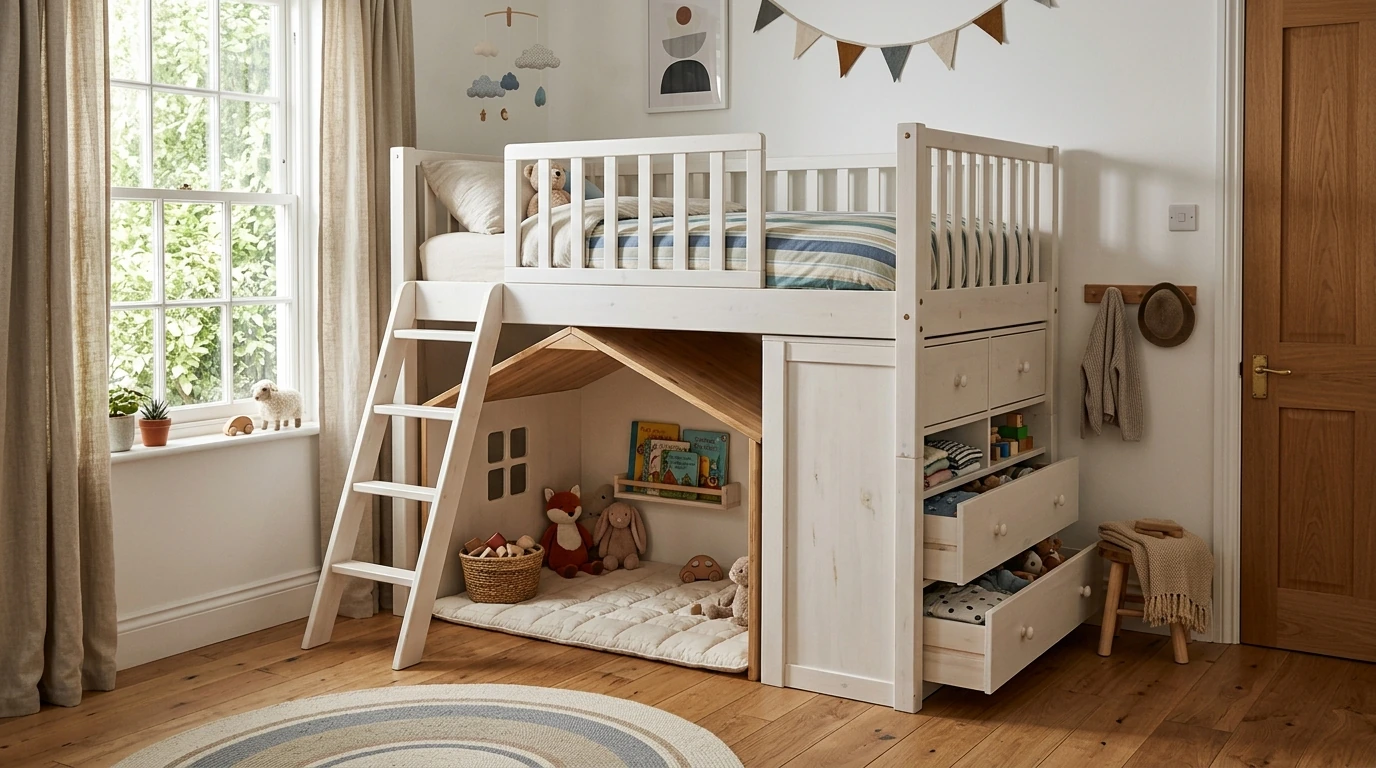
Twin Low Loft Bed That Stores, Plays, and Sleeps—All in One Kid-Friendly Footprint
Kids’ rooms work hardest when they can do more than one job. A twin size low loft bed with storage and a game-house space is designed to open up the floor, keep everyday items within reach, and create a cozy play zone underneath—without turning the room into a maze of separate furniture pieces. Use this plan to map out fit, function, and daily routines before checkout.
What this low loft setup adds to a kid’s room
A low loft layout helps you “stack” the room’s biggest needs—sleep, storage, and play—inside one footprint. That’s especially helpful when you want more open floor for building sets, dance practice, or simply walking through the room without stepping over bins.
- Sleep up top, open “house” below: a room-within-a-room feel that encourages independent play and calmer wind-down routines.
- Storage built into the bed footprint: helps reduce extra dressers or totes that eat up walking space.
- A clearer room layout: by stacking functions vertically, you can dedicate one corner to reading, one to toys, and keep a clean path to the door.
If you’re ready to anchor the room with an all-in-one setup, our team recommends starting with the Twin Size Low Loft Bed with Storage and Game House for Kids and planning the room around the routines you already do every day: pajamas, story time, backpack drop, and toy resets.
At-a-glance planning checklist (measure once, enjoy daily)
Before you commit, measure the space you actually get to use—not just wall-to-wall. Doors, closets, vents, and heaters all “borrow” square footage in a way that matters at bedtime.
- Start with the room’s usable rectangle: wall-to-wall space minus door swing, closet clearance, and any baseboard heaters/vents.
- Decide what must live in the bed zone: bedding, books, pajamas, favorite toys, seasonal storage—then match that to how many storage spots you need.
- Plan lighting early: a gentle night light near the lower play area plus a reading light for the sleeping surface keeps bedtime calmer.
| What to plan | What to measure/decide | Practical tip |
|---|---|---|
| Floor space | Clear walking paths and door/closet swing | Keep a straight path from bed to doorway for midnight bathroom trips. |
| Ceiling height | Comfortable headroom above the sleep surface | Allow space for sitting up and changing sheets without scraping knuckles. |
| Under-bed zone | How the game-house area will be used (reading nook, pretend play, calm-down space) | Define it with a small rug and a basket for “today’s toys.” |
| Storage needs | Daily items vs. occasional items | Put daily-use items at the easiest reach; store seasonal items higher or deeper. |
| Mattress choice | Twin mattress profile that fits the guardrail height and comfort preference | Confirm mattress thickness guidelines before purchase; avoid overly tall mattresses on raised sleep surfaces. |
Storage that actually stays organized (not just “more space”)
The difference between “extra storage” and a room that stays calm is simple: each storage spot needs a job. When everything is allowed everywhere, clutter drifts into the play area and bedtime starts feeling like cleanup time.
- Assign zones: one spot for bedtime (pajamas/blanket), one for school (backpack/lunch bag), one for play (rotating toys).
- Use labeled bins: placing small items into clear categories prevents tiny pieces from spreading into the under-bed space.
- Keep a reset routine: a 3-minute nightly sweep—books back, toys into one basket, tomorrow’s outfit ready—helps the room feel peaceful in the morning.
To make “reset” easier for your child, keep the rule simple: one main toy basket plus one book spot in the lower zone. Everything else lives in the built-in storage and only comes out on purpose.
The game-house space: turning the under-bed area into a calm play zone
The under-bed “house” is most useful when it isn’t treated like a second toy room. A small, predictable setup supports longer play and smoother transitions into sleep.
If you want one purposeful activity that feels “special” in the nook without becoming a pile, our team likes a single project-style item such as the 3D Puzzle Scout Beetle—something you can start, pause, and return to, while keeping small parts contained in one box.
Safety and comfort choices to make before moving day
For broader guidance on loft/bunk safety, you can review the CPSC bunk bed safety guidance and related standards information from ASTM International. For general safe sleep considerations, HealthyChildren.org (AAP) is a helpful reference.
Setup day made simpler: assembly, placement, and long-term care
Complete the room with pieces that support the same routine
- For a floor-level approach to independence, consider our Montessori Floor Bed with Fence as an alternative room anchor.
- Add one purposeful play item rather than many small ones; fewer “loose parts” makes daily reset easier.
- Let the bed do the heavy lifting, then choose only what supports your routines: a small reading light, a hamper, and one toy basket.
FAQ
What mattress works best for a twin low loft bed with guardrails?
A standard twin mattress is the typical match, with the key being a height that keeps the guardrails meaningfully protective. Aim for a comfortable profile that doesn’t sit too tall on the sleep surface.
How can the under-bed game-house space stay tidy?
Keep it simple: one basket for toys, one spot for books, and one cushion or mat to define the zone. Rotating toys and doing a short nightly reset prevents overflow into the walking path.
Where should a low loft bed be placed in a kid’s room?
Place it where you can maintain clear walking paths and avoid hazards like ceiling fans, windows with cords, and dangling chargers. Make sure the climb path is visible at night with soft lighting.









Leave a comment